
Boiler, Heat Pump & AC Wizardry
Heating System Maintenance in South Yorkshire That Keeps Every System Winter-Ready
Signs Your Heating System Needs a Maintenance Visit
Quick Summary: Occasional noises, a slightly slower warm-up, or bills that have crept up while the system still basically works are maintenance signs, not repair signs. The system is still running, these are the early warnings, not a breakdown. These issues turn up in boilers, unvented cylinders and air source heat pumps alike, which is why engineers across South Yorkshire check the whole system rather than just the boiler. If your heating has actually stopped working, that’s a different job, see Heating System Repair. Genuine emergencies, a gas smell or a triggered carbon monoxide alarm, call for something else entirely: immediate action.
Plenty of older properties across South Yorkshire, especially those running combi boilers fitted fifteen or twenty years ago, start showing subtle changes in performance long before anything actually breaks down. Radiators that are warm at the bottom but stone cold at the top usually mean trapped air or a build-up of sludge, both easily sorted during a routine service. An occasional kettling or banging noise from the boiler, one that comes and goes rather than one that’s there every time it fires, is typically limescale or debris restricting the heat exchanger, which crops up a lot given the harder water supply in parts of South Yorkshire.
Uneven heating across rooms, or radiators that need the odd bleed now and then
An occasional kettling or gurgling noise that comes and goes, rather than one that’s constant
Gradually rising gas or electricity bills without increased usage
A pilot light that occasionally flickers or dips, rather than one that keeps going out
Warm-up times that have slowed gradually, not a system that won’t heat up at all
Unvented cylinders taking a little longer to reheat than they used to
Air source heat pumps cycling a little more often in cold snaps
All of these point toward a maintenance visit rather than an emergency callout, because the system is still doing its job, just not quite as well as it should. A qualified engineer can usually sort them with a power flush, a pressure adjustment, a sensor clean or a quick component check, well before any of it turns into a costly breakdown. The same logic applies to unvented hot water cylinders, which need annual checks on their expansion vessel and valves, and to air source heat pumps, where refrigerant pressure and defrost cycles are easy to overlook until something starts struggling. If any of these have tipped over into the system not working at all, that’s no longer a maintenance job, head to Heating System Repair instead.
Some symptoms, though, call for a completely different response. A smell of gas, a sounding carbon monoxide alarm, scorch marks near the boiler casing, or a total system shutdown in freezing weather are emergencies that need an engineer out immediately, not a scheduled service. If you’re facing any of these, switch the system off, ventilate the property, and get urgent help straight away.
What a Full Heating System Maintenance Visit Includes
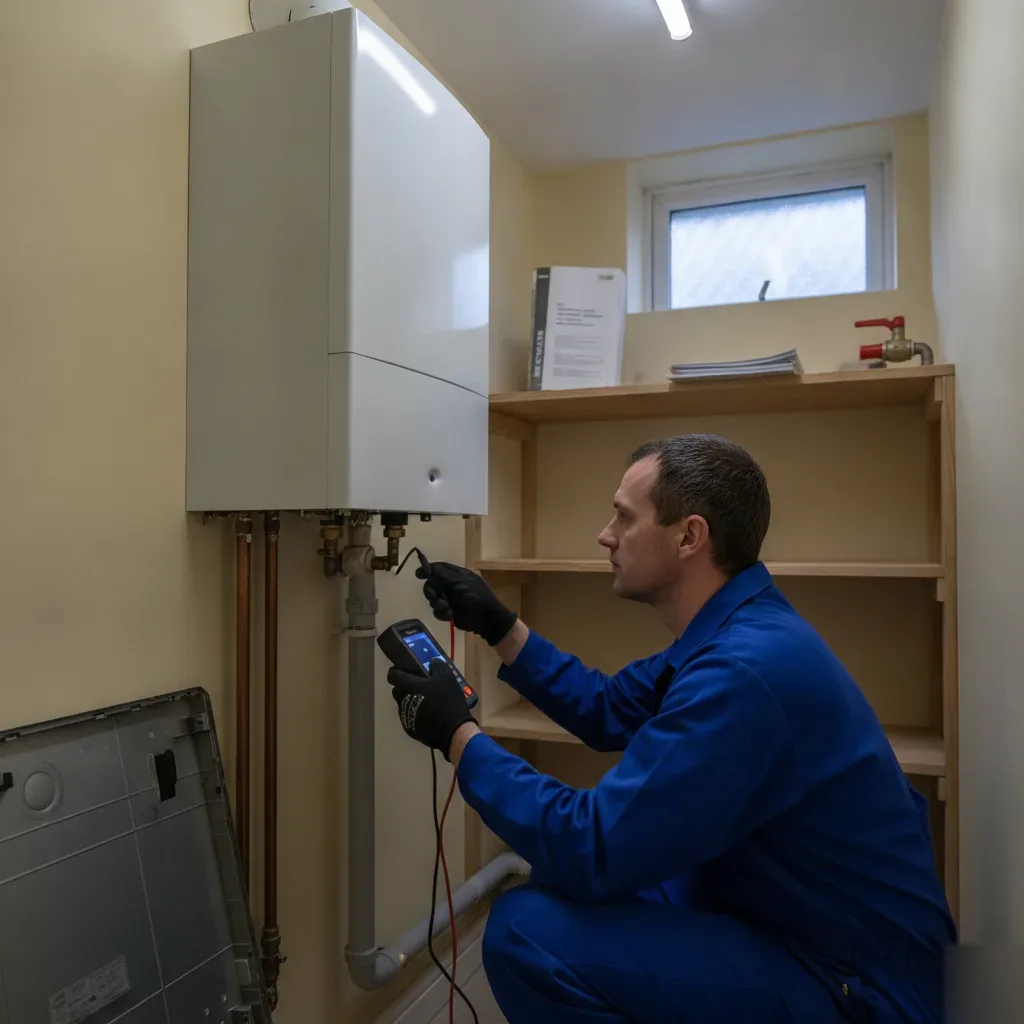
A proper heating system maintenance visit in South Yorkshire follows a set, methodical sequence, not a quick glance and a signature on the way out. Whether the property has a combi boiler, an unvented cylinder or a heat pump, the engineer works through the same disciplined checklist, adapting only the technical detail to match the appliance. That consistency matters, because it means nothing gets skipped, even on an annual visit that might feel routine to the homeowner but is anything but routine from a safety standpoint.
The visit begins before any tools come out. The engineer should show photo identification along with their Gas Safe registration card, and it’s worth checking that card lists the correct category for the work being done, since not every registered engineer is qualified for every appliance type. From there, a full visual inspection covers the boiler casing, pipework, seals and surrounding ventilation, looking for corrosion, staining or signs of leaks that might not yet have thrown up a fault code.
Identification and Gas Safe registration verified before any work begins
Visual inspection of the appliance, pipework, and surrounding installation for damage or wear
Flue integrity check and safety device testing to confirm safe removal of combustion gases
Gas pressure and flow test to check the appliance is burning fuel efficiently and safely
Functional run test putting the system through heating and hot water cycles to check response and controls
Written record handed over detailing findings, any parts replaced, and recommendations for future attention
The flue and safety device check is one of the most critical stages, particularly in older South Yorkshire properties where flue runs can be long or routed through lofts and cavity walls. The engineer checks the flue is correctly sealed, unobstructed and terminating safely, and tests devices such as the flame supervision device and any pressure relief valves to make sure they respond the way they should. A gas pressure test follows, measuring the working pressure at both the meter and the appliance to confirm the boiler or heat pump auxiliary heater is getting the correct supply and burning cleanly rather than running rich or lean.
Once those technical checks are done, a functional run test puts the whole system through its paces, cycling through heating and hot water demand to confirm thermostats, valves and pumps respond correctly together rather than in isolation. The visit closes with a written record, giving the homeowner a clear paper trail of what was checked, any parts replaced and anything flagged for future attention, which turns out to be useful evidence for warranty claims, landlord certification, or simply keeping tabs on the system’s condition year on year.
Boiler, Cylinder, or Heat Pump: Matching Maintenance to Your System
Not every heating system in South Yorkshire gets the same service, and it shouldn’t. A combi boiler tucked into a kitchen cupboard in an older terrace needs a different inspection routine to an unvented cylinder feeding a power shower in a Barnburgh Lane semi, and both differ again from an air source heat pump mounted on the side return of a newer-build home. The appliance type dictates the checklist, the tools required, and how long the engineer needs on site.
Combi boilers: flue gas analysis, heat exchanger inspection, condensate trap clearance, and pressure vessel checks, usually 45 to 60 minutes once casing is off
Unvented cylinders: expansion vessel pressure, temperature and pressure relief valve testing, tundish inspection, and immersion checks, often requiring a G3-qualified engineer and a similar time allowance
Air source heat pumps: refrigerant circuit checks, outdoor unit clearance and debris removal, filter cleaning, and controls calibration, which can take longer due to electrical isolation steps and manufacturer-specific software
Cost structures generally follow one of two models: a flat per-visit fee for a single appliance, or a bundled service plan covering multiple systems in one property. Which? cost guidance consistently points to appliance type, ease of access, and whether several appliances are serviced together as the main price drivers, rather than any fixed national rate. A ground-floor combi with clear access costs less to service than a cylinder tucked into a boxed-in loft requiring a ladder and extra time. Homes running a boiler alongside a cylinder, or a heat pump alongside a hot water tank, often find a bundled visit more efficient than booking separate call-outs, since much of the on-site time goes on setup rather than testing itself.
That’s exactly why having one team maintain all three system types makes practical sense for South Yorkshire households. Rather than coordinating a boiler specialist, a separate unvented cylinder engineer, and a heat pump technician across three different dates, a single visit can cover the full heating system, appliance by appliance, with the paperwork issued together. That consolidation cuts down on disruption, avoids duplicated travel charges, and gives you one point of contact who understands how the boiler, cylinder and heat pump interact within the same property.
When Maintenance Isn’t the Right Call
Here’s the honest bit. Maintenance isn’t the right call if your boiler has already stopped working. A yearly service checks components, cleans things out, and catches small issues early. It isn’t designed to fix a boiler that’s banging, leaking, or throwing up a fault code right now.
If you’ve got no heat or hot water today, you need Boiler Repairs or Heating System Repair, not a maintenance slot booked for next week. We hear this mix-up a lot. Someone calls wanting a service, but what they’re describing is a live fault. Different job, different urgency.
Age matters too. If your boiler is old, parts are hard to source, and it’s already been through a string of repairs, a maintenance visit won’t change that trajectory. At that point Boiler Replacement is the more sensible conversation, even though nobody loves hearing it.
No heat, no hot water, or a fault code showing right now – that’s a repair call, not maintenance
Frequent breakdowns over the past year or two – replacement is likely the better long-term fix
System installed and commissioned within the last few months – check what’s already included before booking anything extra
Gas safety certificate expired or missing entirely – that’s a CP12 Gas Safety Inspection, a separate legal check
So if you’re staring at a cold radiator wondering whether to book a service, don’t. Get the repair sorted first. Our team will always tell you straight if maintenance is the wrong move for what’s going on.
Heating Maintenance for South Yorkshire’s Terraced Homes and New Builds
South Yorkshire has a real mix of housing, older terraced streets sitting close to newer estate developments. That mix matters more than most people think when it comes to heating system maintenance.
In the older terraced homes, we’re often dealing with narrower pipework and systems that have been upgraded piece by piece over the years. A boiler swap here, a new radiator there. Nothing wrong with that, but it means the system as a whole can develop weak points nobody’s checked in a while. Sludge builds up faster in older pipework. Circulation gets sluggish. You might notice one room never quite warms up like the rest of the house, and that’s usually where we start looking first.
Newer builds bring a different set of checks. Modern combi systems and heat pump setups rely on sensors, electronic controls and tighter tolerances than the old cast iron systems ever did. A tiny calibration drift or a filter overdue for a clean can quietly knock down efficiency long before it causes an obvious fault. You won’t always hear a bang or spot a leak. Sometimes it’s just a bill that creeps up month over month.
Older terraces: check for sludge buildup, narrow bore circulation issues, and radiators that heat unevenly
Newer estates: check control calibration, filter condition, and system settings against manufacturer spec
Both: check for corrosion, pressure loss, and components nearing the end of their working life
So whether your home is a hundred years old or five, the goal of heating system maintenance stays the same: catch the small stuff before it turns into the big stuff. That’s the whole point.
Frequently Asked Questions
How often should I book a heating system maintenance visit in South Yorkshire?
You should book a maintenance visit once a year, ideally before the coldest months hit. Many homes in South Yorkshire sit on a harder water supply, which speeds up limescale build-up inside boilers and cylinders. An annual check catches this early, along with trapped air or sludge in radiators, before it turns into uneven heating or a costly breakdown. Sticking to yearly visits also keeps a clear service record, which is handy for landlord certificates or tracking your system’s condition over time.
What happens when the engineer arrives for my maintenance visit?
The engineer shows photo ID and their Gas Safe registration card before touching anything, so check it lists the right category for your appliance. From there, they carry out a full visual inspection of the boiler, pipework and seals, followed by a flue safety check and gas pressure test. A functional run test puts your heating and hot water through their paces. You’ll get a written record at the end covering what was checked and anything flagged for later.
My radiators are warm at the bottom but cold at the top. Is that a local water issue?
Yes, this is usually trapped air or sludge build-up, and it’s common in South Yorkshire because of the harder water in this part of South Yorkshire. Minerals in the water settle inside radiators and pipework over time, restricting flow and leaving cold patches near the top. A power flush or a bleed during a routine maintenance visit usually sorts it. Left unchecked, it forces your boiler to work harder and can push your energy bills up gradually.
Do older boilers in South Yorkshire need more frequent servicing?
Older combi boilers, especially ones fitted fifteen or twenty years ago, often benefit from closer attention during their annual service. These units show subtle performance changes, like kettling noises or slower warm-up times, long before an actual fault appears. An engineer checking the whole system, not just the boiler casing, will usually catch limescale or debris in the heat exchanger early. Staying on top of yearly visits helps these older systems keep running reliably through winter.
What should I do if I smell gas or my carbon monoxide alarm goes off?
Switch your heating system off straight away, open windows to ventilate the property, and get urgent help immediately. This isn’t something to wait on for a scheduled maintenance visit. Other emergency signs include scorch marks near the boiler casing or a total system shutdown during freezing weather. These situations need an engineer out right away rather than a routine check, so don’t try to diagnose or fix them yourself in the meantime.
Does a maintenance visit cover unvented cylinders and heat pumps, or just boilers?
A proper maintenance visit covers whatever heating system you have, whether that’s a combi boiler, an unvented cylinder, or an air source heat pump. Unvented cylinders need annual checks on the expansion vessel and valves, while heat pumps need their refrigerant pressure and defrost cycles looked at. The engineer follows the same disciplined checklist for each appliance type, just adjusting the technical detail. This way, nothing gets overlooked no matter what’s heating your home.