
Air Source Heat Pump Service in Rotherham and Barnsley: Keep It Running as Designed
Air source heat pump servicing from £240 inc VAT across Rotherham and Barnsley. Protects efficiency, running costs and your manufacturer warranty.
Heat pump service from£240including VAT, cylinder included · Band A £264
- Gas Safe registered 584578
- Heat Geek Assured
- 100+ 5-Star reviews on Google
- In the trade since 2009
- DBS checked
What a service costs and what it covers
An annual heat pump service is £240 including VAT at standard rate and £264 in Band A. A set appointment time rather than a standard 4-hour slot adds £30. Refrigerant isn't included if the system needs topping up — we'd quote that separately, and we'd want to find out why it's low rather than just refilling it.
Check which band your postcode falls into on our rates page.
Why a heat pump needs servicing differently to a boiler
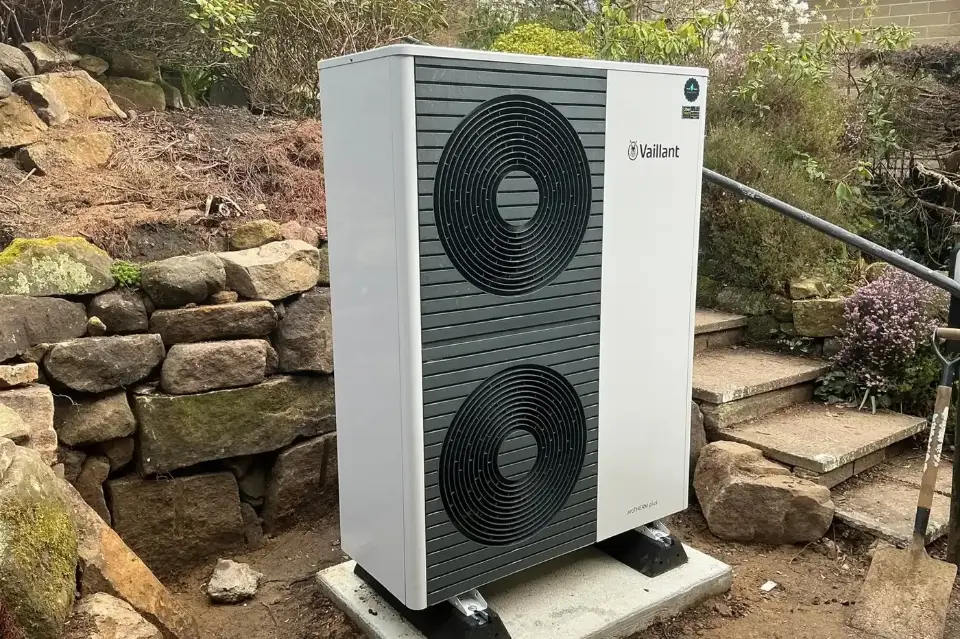
A boiler either works or it doesn't. A heat pump can run perfectly happily for years while quietly costing you more than it should.
That's the difference that catches people out. A heat pump with a slightly low refrigerant charge, a filter that hasn't been cleaned, or a flow temperature set 5°C too high will still heat your house. It just does it less efficiently, and the only place that shows up is your electricity bill.
An annual service is what stops that drift. It's also what keeps most manufacturer warranties valid — check yours, but nearly all of them require documented annual servicing.
Signs it's overdue
Quick Summary: Rising bills with no change in usage is the clearest sign. A heat pump rarely announces a problem — it just gets gradually more expensive to run.
- Energy bills creeping up without any change in how you use the heating
- Rooms that used to feel warm now feel lukewarm or uneven
- The system runs almost non-stop, even in mild weather
- The filter light or service reminder has come on
- It's been more than twelve months since the last visit
If your system's under three years old and doing any of this, don't assume it's fine just because it's new. Newer units still need airflow, refrigerant levels and controls checked.
If it's making a new noise, tripping the electrics, or icing up and not clearing, that's a fault rather than a service overdue — our heat pump repair page covers what to do.
What we check
Our engineer arrives with a plan, not a guess. It isn't a quick glance and a signature — a heat pump only runs efficiently when every part of it is doing its job.
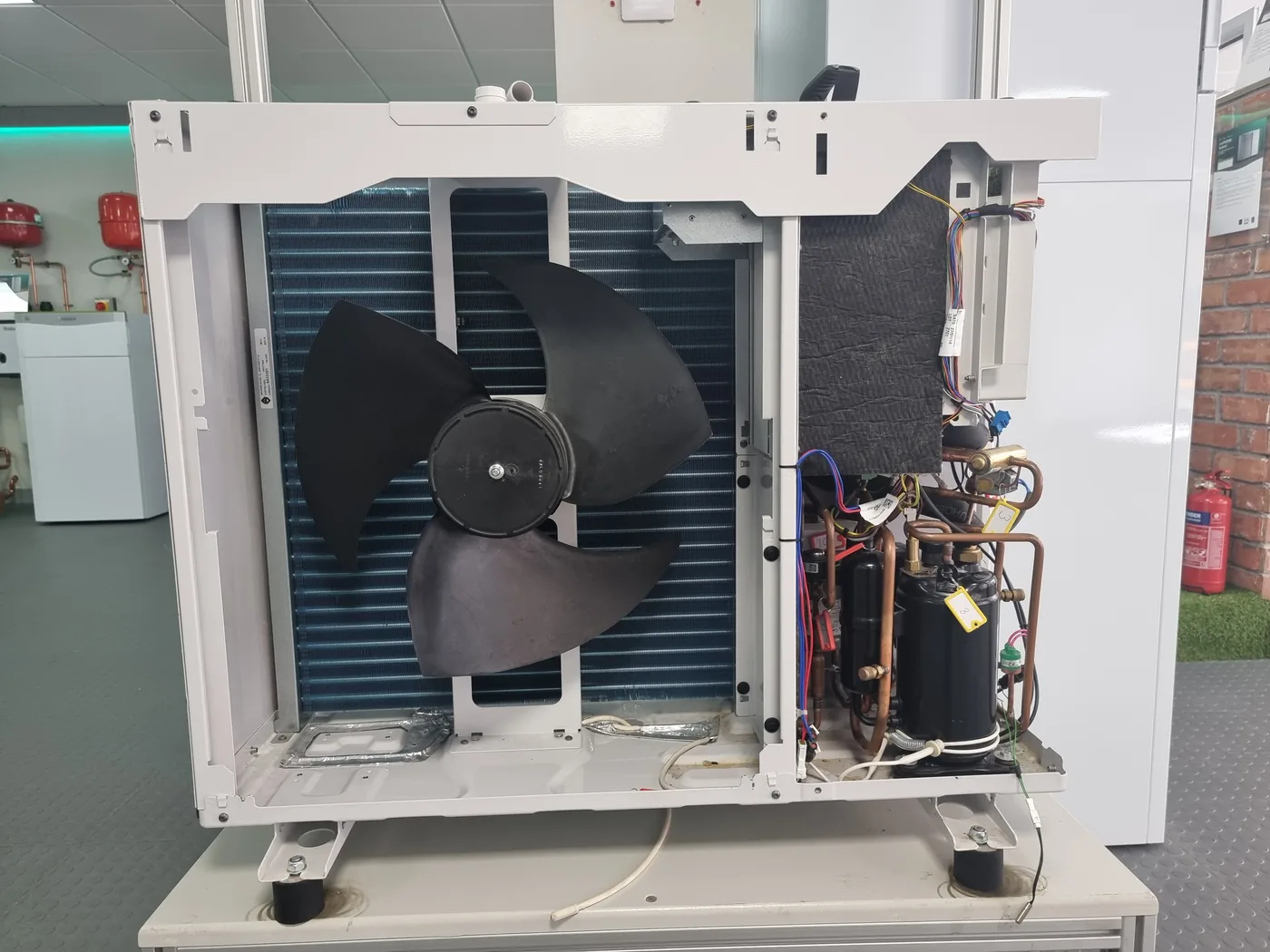
- Outdoor unit checked for debris, ice buildup, or airflow blockages around the fan
- Refrigerant pressures tested and pipework checked for signs of leaks
- Electrical connections and controls inspected for wear or loose fittings
- Flow and return temperatures checked against what the system was designed to deliver
- Filters cleaned or replaced where needed
- Controller settings reviewed with you, and anything affecting running costs flagged
That fourth one matters more than the rest put together. Flow temperature set too high is the single most common reason a heat pump costs more to run than it should, and it's invisible unless someone measures it against the property's actual heat loss.
You'll get a plain explanation of what we found, what we did, and what to keep an eye on before we leave.
An Engineer Who Can Answer Your Heat Pump Questions
Plenty of people end up with a heat pump and nobody to ask about it: why it seems to run all day, what the settings do, whether that noise is normal. On a service we check the unit and its cylinder, and we answer your questions while we are there, so you know how to get the best from it.
ASHP service,good communication including text to remind me of arrival. Arrived in allocated time slot, Chris worked methodically and tidily and was able to answer all my questions re ASHP service.
Older properties need the settings reassessed, not just the unit checked
A lot of the housing around Rotherham and Barnsley dates back to the coal-mining era — terraces built for miners' families, still standing, with solid brick walls and smaller radiators than a modern estate.
A heat pump working against that kind of heat loss has to run harder. And the settings that were right at installation may not be right now, because the building changes: new windows, loft insulation topped up, an extension added.
We see plenty of older terraces with flow temperatures set too high because the original design didn't account for the property's real heat loss. Radiators sized for a gas boiler decades ago don't suit a heat pump's lower flow temperatures either. That's a design issue rather than a fault, but it only shows up if someone looks.
So on an older property we check flow temperatures against the actual heat demand, not a generic default — and if the radiators are the limiting factor, we'll tell you what upgrading them would actually buy you.
What our customers say
Used UberHeats many times now and this visit was for my heat pump service. Top quality as always!
Annual Heat Pump Service
Chris will be welcomed back to our house any time. He’s now the only heating tradesman we’ll use. Professional, thorough, polite.
Areas we cover
Most of our heat pump and system design work is close to home. Rotherham (S60 to S66), Barnsley (S70 to S75), Doncaster (DN1, DN2, DN4, DN5 and DN6), north and east Sheffield (S4, S5, S9 and S35) and Hemsworth and South Elmsall (WF9) are all on our standard rate. Further out, Chesterfield and North Derbyshire (S40 to S44), Worksop (S80 and S81), Wakefield (WF1 to WF5), the Five Towns, and Holmfirth and Denby Dale (HD8 and HD9) are on our Band A rate, 10% higher for the travel. We don’t cover Sheffield city centre (S1, S2, S3 and S6), Dewsbury and Batley, Huddersfield itself, or Leeds.
Standard rate
- S60
- S61
- S62
- S63
- S64
- S65
- S66
- S70
- S71
- S72
- S73
- S74
- S75
- DN1
- DN2
- DN4
- DN5
- DN6
- S4
- S5
- S9
- S35
- WF9
- DN12
Band A: same work, 10% added for travel
- S7
- S8
- S10
- S11
- S12
- S13
- S14
- S17
- S20
- S21
- S26
- S36
- S25
- S18
- S32
- S33
- S40
- S41
- S42
- S43
- S44
- S80
- S81
- NG20
- DN10
- DN11
- DN22
- DN3
- DN7
- DN8
- DN9
- DN21
- WF1
- WF2
- WF3
- WF4
- WF5
- WF6
- WF7
- WF8
- WF10
- WF11
- HD8
- HD9
Related services
Frequently Asked Questions
How often should a heat pump be serviced?
Once a year. That keeps refrigerant levels, filters and controls working as they should, and keeps most manufacturer warranties valid. Skipping a year doesn't always cause a breakdown, but it lets small inefficiencies build up quietly. We often see units that have gone two or three winters without a check, and they almost always need more work than one serviced yearly.
How much does a heat pump service cost?
£240 including VAT at standard rate and £264 in Band A. A set appointment time rather than a standard 4-hour slot adds £30. Refrigerant isn't included if the system needs topping up — we'd quote that separately and want to find out why it's low rather than just refilling it. You can check which band your postcode falls into on our rates page.
Can rising energy bills mean my heat pump needs a service?
Yes, and it's the clearest sign there is. Bills creeping up without any change in your heating habits usually means the system is working harder than it should — a blocked filter, low refrigerant, an airflow problem, or a flow temperature set higher than the property needs. Catching it with a service visit is far cheaper than letting it run all winter.
How do I know if I need a repair instead of a routine service?
Grinding or clicking noises, tripped electrics, or a house that won't hold heat even after checking the basics point to a repair. A service covers cleaning, checks and small adjustments; fault-finding is a different job because it means tracking down a specific problem. If your system is doing something new or different, mention it when you book so the engineer knows what to look for.
Does the type of house affect how long a service takes?
Access to the outdoor unit makes a real difference. A terraced house with a tight side passage takes longer to reach than a detached home with open space around the unit. Roof-mounted units also add time. It isn't about the heat pump itself, it's about how easily the engineer can get to it, check it properly and clean around the fan.
Talk to the office team
Office open Monday to Friday 8am to 6pm, and Saturday 8am to 12pm. Tell us what's going on and we'll book the right visit, in a weekday 4-hour slot: 8am to 12pm, 10am to 2pm or 12pm to 4pm.