
MagnaCleanse Flush in Rotherham and Barnsley: Magnetic Cleaning for Sludge-Heavy Systems
MagnaCleanse magnetic flush £510 including VAT, covering up to 10 radiators. Removes black iron oxide sludge from cast iron systems. Rotherham and Barnsley.
MagnaCleanse from£510up to 10 radiators, including VAT · Band A £540
- Gas Safe registered 584578
- Heat Geek Assured
- 100+ 5-Star reviews on Google
- In the trade since 2009
- DBS checked
What magnetite actually is, and why it matters
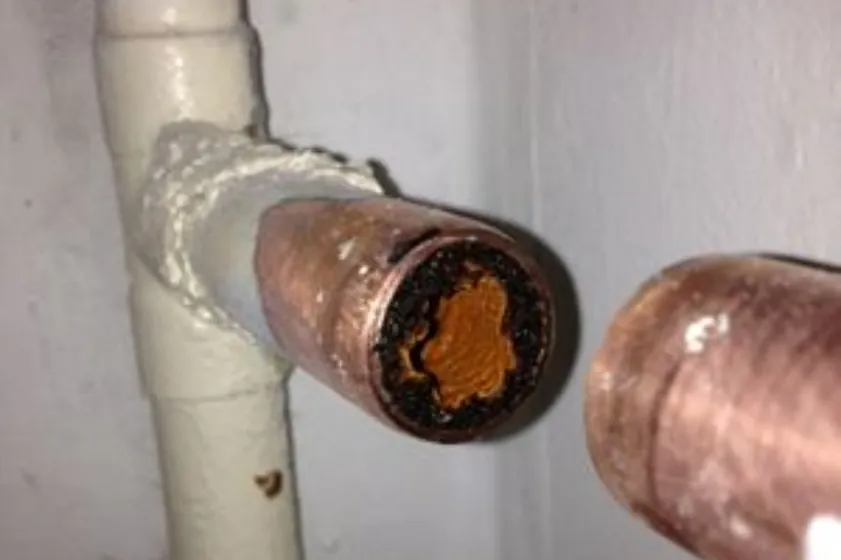
The black sludge that comes out of an old heating system has a name: magnetite. It's iron oxide, and it forms when water sits in contact with steel and cast iron over years, slowly corroding it from the inside.
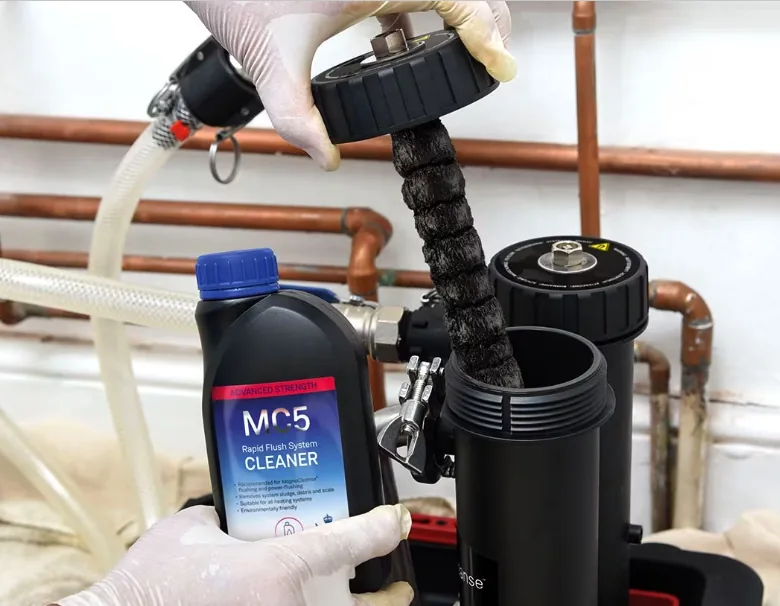
It matters because magnetite is magnetic — which is a problem and an opportunity at once. The problem: it's attracted to the magnets in your boiler's pump and circulation components, where it builds up and wears them out. The opportunity: it can be pulled out magnetically, which is exactly what a MagnaCleanse unit does.
If you've bled a radiator and the water ran black rather than brown, that's magnetite. Brown suggests general debris and corrosion; black suggests a system that's been quietly eating its own radiators for years.
A MagnaCleanse flush is £510 including VAT at standard rate and £540 in Band A, a flat price covering up to 10 radiators and chemicals. More than ten, and we quote the extra ones separately.
Why cast iron systems produce so much of it
A lot of the terraced housing around Rotherham, Barnsley and the Dearne villages still runs original cast iron radiators fitted decades ago. Cast iron is durable — that's why they're still there — but it corrodes internally in a way modern pressed steel panels don't, and it sheds magnetite steadily throughout its life.
Add hard water, which most of this area has, and you get limescale layering on top of the magnetite. The two together coat the heat exchanger, which is what causes kettling: that rumbling, popping sound from the boiler, like a kettle starting to boil. The water inside is overheating in patches because it can't move through the deposits.
Left alone, kettling puts real strain on the boiler and shortens its working life.
- Rusty or black water when you bleed a radiator
- One or two radiators that never get properly warm, however long the heating's on
- Boiler firing more often, or struggling to reach temperature
- A general drop in heat output across the whole house
- Kettling — rumbling or popping from the boiler
When a magnetic flush is the right choice
We'll be straight about this: for most sludge-heavy systems, a full power flush with MagnaCleanse incorporated clears more than a standalone magnetic flush. That's our default recommendation, and it's £750.
A standalone MagnaCleanse at £510 is the right call when:
- The problem is specifically magnetite, not general debris — black water rather than brown, cast iron radiators, no history of building work introducing rubbish into the system
- The system can't take the force of a full power flush — very old pipework, joints you'd rather not disturb, or a system where we've found thin pipe walls on inspection
- It's a top-up between full flushes — a system properly flushed a few years ago that needs the magnetite pulled out again rather than the whole treatment repeating
- Budget or access rules out the full job, and getting most of the magnetite out beats doing nothing
If the system is basically healthy and just needs freshening up, a mains flush at £390 may be all it needs.
We assess flow, check for cold spots and test the water before recommending any of the three. We're not going to default to the pricier option when a cheaper one will do the work.
If you'd rather have the whole system looked over first, with the boiler, cylinder, controls and radiators checked together, book heating system maintenance across Rotherham and Barnsley and we'll tell you on the day whether a flush is worth doing.
Before a new boiler, this isn't optional
If you're fitting a new boiler to old pipework, the system needs cleaning first. Most manufacturers make it a warranty condition, and there's a practical reason: a new heat exchanger dropped into a system full of magnetite is going straight back into the conditions that killed the last one.
This is where the magnetic element earns its keep specifically. Chemical and mechanical flushing breaks sludge up and pushes it out, but magnetite is fine enough that some stays in circulation. The magnetic filtration catches what the flush alone leaves behind.
We'd usually pair this with fitting an inline magnetic filter at the same time, so the system keeps catching magnetite after we've gone. If yours doesn't have one, it's worth discussing while the system's already drained.
What happens on the day
- We connect the MagnaCleanse unit to your system, usually at the boiler or a convenient radiator valve
- A cleaning chemical circulates through the pipework to loosen sludge and rust deposits
- Each radiator is isolated and flushed individually, so cold spots caused by trapped debris get targeted directly
- We check flow rates room by room, comparing before and after readings
- Dirty water is flushed out and replaced with clean, treated water
- A magnetic filter check confirms the system is clear before we finish
That radiator-by-radiator step matters more than people realise. A whole-system flush can miss a single blocked radiator tucked in a back bedroom; this method doesn't. We've pulled black sludge out of systems that looked fine from the outside.
Most jobs take a few hours rather than all day, and your heating goes back on the same day.
If a radiator was stone cold at the bottom before we started and warm end to end after, that's the proof.
What our customers say
Annual service to 2 boilers
I have used Uber for the last 5 years, initially for boiler installation and therafter for annual servicing and to flush the system a couple of years ago. Chris is always very professional and thorough in the work he carries out.
Water pressure
Really good service. Chris arrived exactly when he said he would. The website for booking was so easy to use. Would have no hesitation in recommending UberHeats to everyone.
Our area
We flush, repair and maintain heating systems across Rotherham, the Dearne Valley and Barnsley (S60 to S66 and S70 to S75), Doncaster (DN1, DN2, DN4, DN5 and DN6) and north and east Sheffield (S4, S5, S9 and S35), all at our standard rate. Further out, Chesterfield, Worksop, Wakefield, Pontefract and Castleford, and the rest of Sheffield outside the city centre, are the same work on our Band A rate, 10% higher for the travel. Ring 07851 911574 with your postcode and we’ll tell you which applies.
Standard rate
- S60
- S61
- S62
- S63
- S64
- S65
- S66
- S70
- S71
- S72
- S73
- S74
- S75
- DN1
- DN2
- DN4
- DN5
- DN6
- S4
- S5
- S9
- S35
- DN12
- WF9
Band A: same work, 10% added for travel
- S7
- S8
- S10
- S11
- S12
- S13
- S14
- S17
- S20
- S21
- S26
- S36
- S25
- S18
- S32
- S33
- S40
- S41
- S42
- S43
- S44
- S80
- S81
- NG20
- DN10
- DN11
- DN22
- DN3
- DN7
- DN8
- DN9
- DN21
- WF1
- WF2
- WF3
- WF4
- WF5
- WF6
- WF7
- WF8
- WF10
- WF11
- HD8
- HD9
Related services
Frequently Asked Questions
What's the difference between a MagnaCleanse and a power flush?
A MagnaCleanse uses a magnetic filter to pull ferrous sludge — black iron oxide — out of the system as it circulates. A power flush pushes water and chemicals through at high force to break up and clear sludge mechanically. Our full power flush includes MagnaCleanse as standard, so it does both. A standalone MagnaCleanse at £510 is the lighter option, suited to magnetite specifically or to systems too old to take the force of a full flush.
Will a MagnaCleanse get rid of kettling noises from my boiler?
Usually, yes. Kettling happens when sludge and limescale coat the heat exchanger and water overheats in patches. Clearing that buildup lets water move properly again, which stops the rumbling and popping. If the noise carries on afterwards, it usually points to a fault in the boiler itself rather than sludge.
Why do older homes here need this more than newer builds?
Older properties around Rotherham and Barnsley often still have original cast iron radiators, and cast iron sheds magnetite far more than modern pressed steel panels do. Over the years that black sediment settles at the bottom of the radiators, which is why so many terraced properties develop cold patches and kettling. Hard water in this area layers limescale on top of it.
Do I need a flush before a new boiler?
Yes, and most manufacturers make it a warranty condition. A new heat exchanger fitted to a system full of magnetite goes straight back into the conditions that damaged the old boiler. It's also worth fitting an inline magnetic filter at the same time, while the system's already drained, so it keeps catching magnetite afterwards.
Can I still use my heating during the flush?
Not while it's happening, since radiators are isolated and cleaned one at a time. Once we've checked flow rates and confirmed the magnetic filter is clear, your heating goes straight back on the same day. Most customers have warm radiators again by the evening, often noticeably warmer than before.
Before booking, please read our system flushing disclaimer.
Talk to the office team
Office open Monday to Friday 8am to 6pm, and Saturday 8am to 12pm. Tell us what's going on and we'll book the right visit, in a weekday 4-hour slot: 8am to 12pm, 10am to 2pm or 12pm to 4pm.