
New Boiler Installation in Rotherham and Barnsley: Gas Safe Engineers You Can Trust
New boiler installation across Rotherham and Barnsley from £2,200 inc VAT. Sized to your home's actual heat loss, not a generic chart. Gas Safe registered.
Boiler installation from£2,200including VAT · same price in both bands
Replacing like for like? Get an instant boiler price →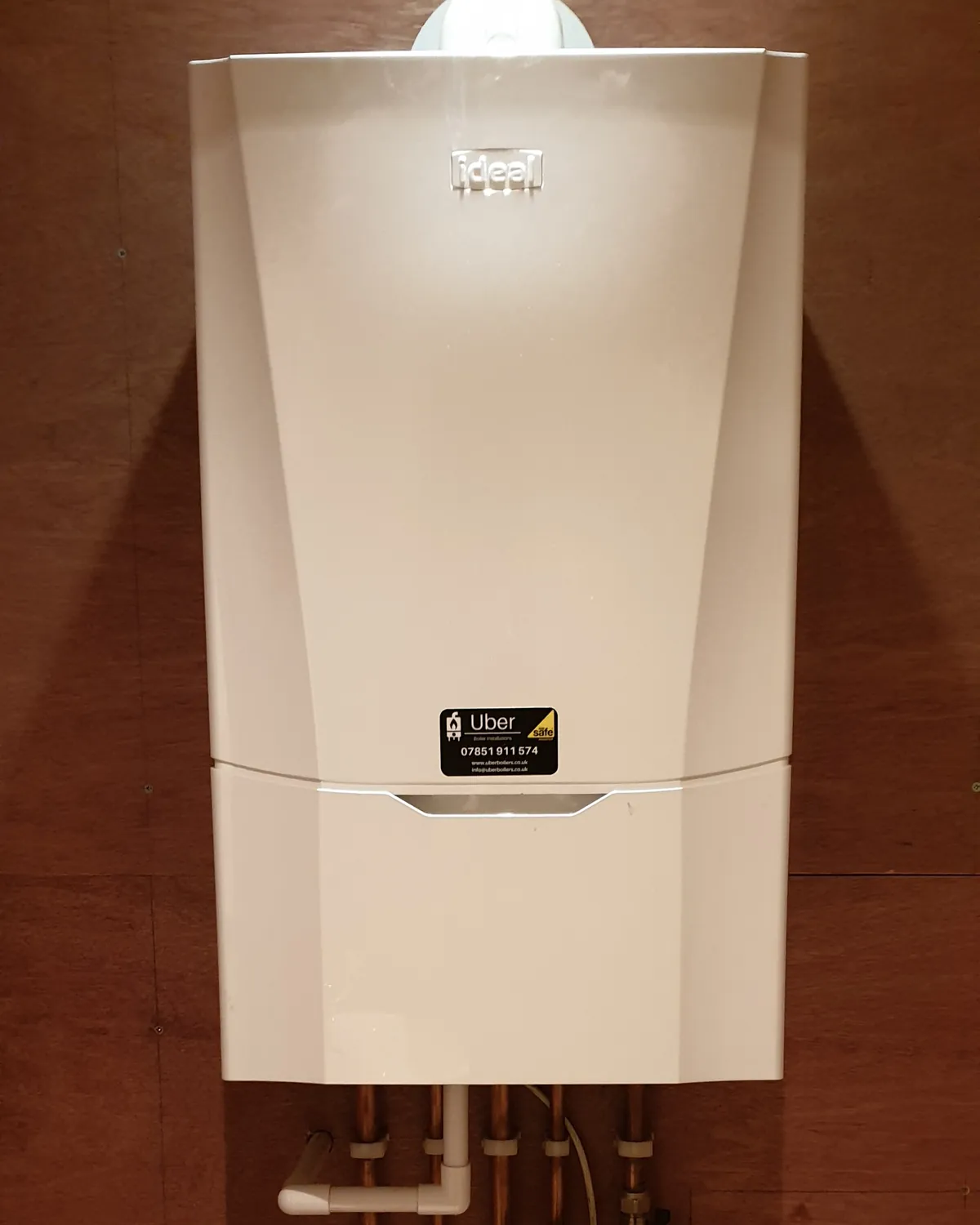
- Gas Safe registered 584578
- Heat Geek Assured
- 100+ 5-Star reviews on Google
- In the trade since 2009
- DBS checked
Repair, replacement, or a brand new installation?
These are three different jobs, and it's worth knowing which one you're asking about before anyone quotes you.
A new installation is what this page covers: putting a boiler somewhere there wasn't one, changing system type, or moving the boiler to a different part of the house. A replacement is swapping a failing boiler for a new one in roughly the same place — if you're weighing that up against another repair, our boiler replacement page sets out the signs to look for. And if your boiler has simply developed a fault, that's a repair.
Installations start from £2,200 including VAT, and we do a quote visit before pricing because the number changes once we've seen what's behind the cupboard door.
Swapping your existing boiler for a new one in the same place is a replacement, not an installation, and it doesn't need a quote visit. Get your boiler swap price online instead.
Do you need a heat loss survey for a boiler swap?
A heat loss survey is the proper way to size a system, and we'd advise one wherever the numbers genuinely matter. It's a separate piece of work — £120 including VAT, £138 in Band A — not part of a quote.
Be realistic about when it earns that, though. If nothing about the building has changed since your current system was sized, the existing output is a sound starting point and you probably don't need one.
It's worth doing if you've had any of these done since:
- an extension or a conservatory
- cladding, rendering or wall insulation
- loft or floor insulation
- new windows or external doors
Every one of those changes the heat loss figures. A boiler sized for the old house will be wrong for the new one — usually oversized, which costs you in gas rather than in comfort.
Getting the size right before anything is fitted
A bigger boiler isn't a better boiler. Oversized units short cycle — firing up, heating the place fast, shutting off, firing up again — and that constant on-off wears parts out early. Undersized units run flat out and still can't keep the radiators warm on a cold January morning.
We size on your actual heat loss, not the old boiler's rating. Rotherham and Barnsley have a real mix of housing: older terraces with solid brick walls and little cavity insulation sitting a street away from newer estates with much lower heat demand. Those two properties need very different boiler output, and copying the old system's size onto a new unit is a shortcut that's often wrong.
- Room-by-room radiator sizes and how much heat each space loses
- Wall construction, insulation levels, and window type across the property
- Hot water demand — how many bathrooms, and how many people use them at once
- Pipework size and layout, since a boiler is only as good as the system feeding it
This is what our Heat Geek Heat-Loss Survey and System Design covers. It's a proper calculation before a single pipe gets touched. Skip it and you risk paying for capacity you'll never use, or installing something that can't keep up on the coldest night of the year.
How installation pricing works
Installation pricing is never one flat number. It depends on the boiler type, the size of your home, and what's already sitting in your airing cupboard or loft. A straight swap — same boiler type, same location — costs less than a full system change. Move the boiler to a new wall, add a flue extension, or upgrade from an old back boiler setup, and the job gets bigger fast.
What actually moves the price:
- Boiler type and output size needed for your home's hot water and heating demand
- Whether pipework, flue runs, or gas supply need extending or rerouting
- Condition of the existing system, including sludge or corrosion in radiators
- Access to the property, loft space, and whether extra labour is needed
- Controls upgrades, like smart thermostats or zoning, added to the install
We always do a quote visit before pricing, because the number can change once we've actually seen the pipework behind the cupboard door. That's not padding the job — it's making sure the price we give you is the price you pay.
Parts and materials are quoted separately from labour, and we tell you the figure before we order anything. Our full price list, including which postcodes fall into which rate band, is on our rates page.
Before you hire anyone, ask what's included. Does the quote cover a flush of the system? Does it include the flue and the building regulations notification? A proper quote answers these without you having to dig for it.
What happens on installation day
A lot of homeowners picture chaos — pipes everywhere, a mess that drags on for a week. It's not like that. A proper installation follows a clear sequence.
Many homes around Rotherham and Barnsley were built before central heating existed at all, which means solid brick walls and tighter airing cupboards than you'd find in a modern build. That changes where the flue can go and how much room we need for the new unit. We check this before day one, not during it.
- We protect your floors and clear the work area before anything gets disconnected
- The old boiler comes out, along with any redundant pipework from the previous system
- New pipework and the flue get fitted according to current building regulations
- The new boiler goes in and gets connected to gas, water, and the flue run
- We power up the system, check pressure, and test every radiator for even heat
- You get a walkthrough of the controls before we leave, plus the paperwork for your records
Most straightforward installs finish within a day. Jobs involving a full central heating installation or a repositioned flue can run longer, and we'll tell you upfront which one yours is.
A boiler that fires up fine but leaves one radiator cold isn't a finished job. We won't sign off until heat reaches every room the way it should.
Choosing a Gas Safe registered engineer you can verify
It's against the law for anyone to fit or work on a gas boiler unless they're Gas Safe registered. Not a preference — a legal requirement.
Every registered engineer carries a Gas Safe ID card, and you can ask to see it before any work starts. That card shows their licence number and, importantly, which specific gas work they're qualified to do. Some engineers are registered for cookers but not boilers, so the card matters more than the badge on the van.
- Ask to see the Gas Safe ID card and check the photo matches
- Check the card covers boilers specifically, not just general gas appliances
- Ask what happens after the install, and who signs off the work
- Confirm the engineer will register the new boiler with the manufacturer
Our registration number is 584578, and you can check it on the Gas Safe Register website before we come anywhere near your gas supply. We get asked to show the card on most jobs and don't mind at all — if anything it tells us the customer is paying attention, which is exactly what you should be doing.
Registration alone doesn't tell you about installation quality, though. That's a different question. Being Heat Geek Assured means we follow a stricter design and installation standard on top of the legal minimum, particularly around system efficiency and heat loss calculations.
Ask about a heat pump while you're on the phone
When you ring for a boiler quote, we'll give you a heat pump estimate alongside it if you want to see both. Same call, no extra cost, no obligation.
Most people don't ask, because they assume the answer is obviously more expensive. With the £7,500 Boiler Upgrade Scheme grant taken off up front, a lot of them are surprised how close the two come out.
Worth being straight about what you'd be comparing. The boiler figure is a firm price from a quote visit. The heat pump figure is an estimate until a heat loss survey is done, which is the point the number becomes fixed. So it's two things worth seeing side by side, not two final prices.
What our customers say
I had not heard of this firm before, however it was Gas safe registered and local to me, so decided to use them. The plumber was very professional and efficient . He arrived the next morning within the time frame allocated. I was totally happy with the boiler service and so have booked him to replace my radiator. He found an available free slot for me next week. The prices quoted for both jobs were good and affordable for me. He was happy to accept cash, as I prefer to make my payments that way.
Boiler replacement and servicw
Chris has serviced the boiler in my rental property and has recently replaced it due to the old one becoming inefficient and unreliable. He is always honest, polite and carries out the work as when he says along with being very neat and tidy. If you need any boiler work doing I would highly recommend Uber Heats
Where we work
Our standard rate covers all of Rotherham (S60, S61, S62, S65 and S66), the Dearne Valley (S63 for Wath upon Dearne, Bolton upon Dearne, Goldthorpe and Thurnscoe, and S64 for Mexborough, Swinton and Kilnhurst), all of Barnsley (S70 to S75), Doncaster (DN1, DN2, DN4, DN5, DN6 and the north of DN12) and north and east Sheffield (S4, S5, S9 and S35). Chesterfield, Worksop, Wakefield, Pontefract and the rest of Sheffield outside the city centre are on our Band A rate: the same work, with 10% added for the travel. Not sure which you’re in? Ring 07851 911574 with your postcode and we’ll tell you straight away.
Standard rate
- S60
- S61
- S62
- S65
- S66
- S63
- S64
- S70
- S71
- S72
- S73
- S74
- S75
- DN1
- DN2
- DN4
- DN5
- DN6
- DN12
- S4
- S5
- S9
- S35
- WF9
Band A: same work, 10% added for travel
- S7
- S8
- S10
- S11
- S12
- S13
- S14
- S17
- S20
- S21
- S26
- S36
- S25
- S18
- S32
- S33
- S40
- S41
- S42
- S43
- S44
- S80
- S81
- NG20
- DN10
- DN11
- DN22
- DN3
- DN7
- DN8
- DN9
- DN21
- WF1
- WF2
- WF3
- WF4
- WF5
- WF6
- WF7
- WF8
- WF10
- WF11
- HD8
- HD9
Related services
Frequently Asked Questions
How long does a boiler installation take?
Most straightforward installs finish within a single day. If you're keeping the same boiler type and location, we can disconnect the old unit, fit the new one, and test the system before we leave. Jobs that involve moving the boiler, extending the flue, or a full central heating installation take longer. We'll tell you upfront which category your job falls into, so you're never guessing how long you'll be without heating.
How much does a new boiler cost?
Boilers supplied and installed start from £2,200 including VAT, and the final figure depends on output size, whether pipework or the flue need rerouting, and the condition of the existing system. We do a quote visit before pricing rather than giving a number over the phone, because what's behind the cupboard door changes the job. Parts and materials are quoted separately from labour, and you'll see the figure before we order anything.
Do I need a heat loss survey for a boiler swap?
Usually not. If nothing about the building has changed since your current system was sized, the existing output is a sound starting point. It's worth doing if you've since added an extension or conservatory, cladding, rendering or wall insulation, loft or floor insulation, or new windows and external doors — each of those changes the heat loss figures. A survey is a separate piece of work at £120 including VAT, £138 in Band A.
Can my new boiler go in a different spot than the old one?
Yes, but moving it adds work compared to a straight swap. Repositioning means extending pipework, rerouting the flue, and sometimes running new gas supply lines. This is common in older properties where a back boiler sat in an awkward spot. We do a quote visit first, so you know exactly what moving the boiler will involve before we start.
Why do older homes need extra checks before installation?
Many properties around Rotherham and Barnsley were built before central heating existed, so they often have solid brick walls and tighter airing cupboards than newer builds. That changes where the flue can run and how much space the new unit needs. We check this before the job starts, not on the day. Skipping that step is how installers end up with surprises halfway through.
Do I need a Gas Safe registered engineer for a new boiler?
Yes. Any boiler installation must be carried out by a Gas Safe registered engineer — it's the law, and it protects you and your family from unsafe gas work. Our registration number is 584578 and you can check it on the Gas Safe Register website. Always ask to see an engineer's card before work starts. A genuine installer will show you without hesitation.
Talk to the office team
Office open Monday to Friday 8am to 6pm, and Saturday 8am to 12pm. Tell us what's going on and we'll book the right visit, in a weekday 4-hour slot: 8am to 12pm, 10am to 2pm or 12pm to 4pm.