
Air Source Heat Pump Installation in Rotherham and Barnsley: Sized Right for Every Home Type
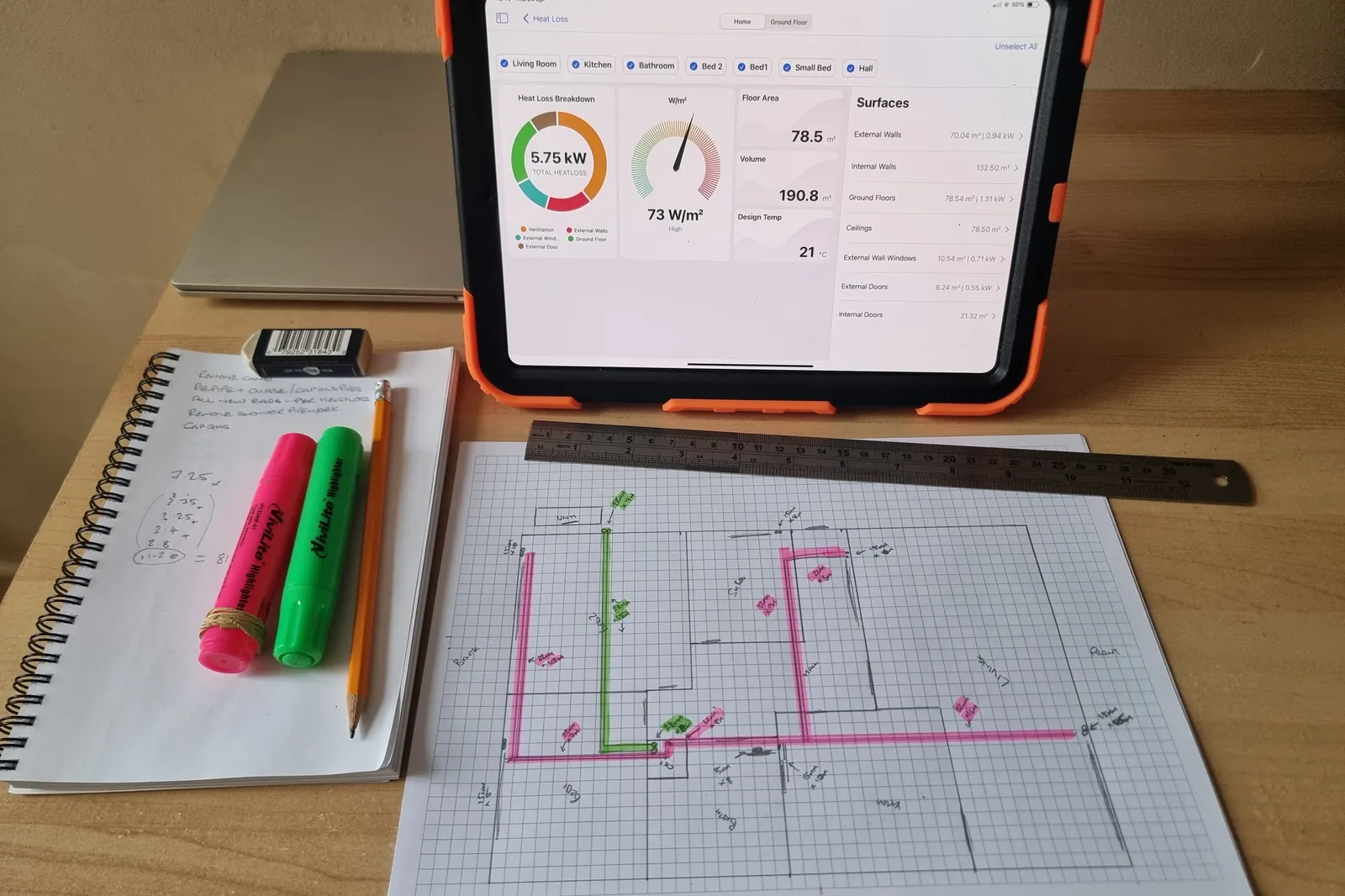
Air source heat pump installation across Rotherham and Barnsley. Heat Geek Assured, designed around a room-by-room LiDAR heat loss survey.
Boiler Upgrade Scheme grant£7,500taken off your quote
- Gas Safe registered 584578
- Heat Geek Assured
- 100+ 5-Star reviews on Google
- In the trade since 2009
- DBS checked
Will a heat pump work on your house?
Quick Summary: Most semis and new builds take an air source heat pump without much fuss. Older solid-wall terraces can still work, but usually need bigger radiators or extra insulation first to keep running costs sensible.
It comes down to the walls, the radiators, and how much heat the place loses on a cold night. We ask these questions on every survey, no exceptions.
New-build estates are the easiest yes. Modern building regs mean better insulation and lower heat loss, so a heat pump can run at lower flow temperatures and still keep the house warm.
Semis built from the 1930s onward with cavity walls usually land in the same category, once we've confirmed the radiators are sized right.
Older terraces are a different story. A lot of the terraced streets around Rotherham and the Dearne villages have solid brick walls with no cavity to insulate. That doesn't rule out a heat pump — it means the design has to work harder: bigger radiators, sometimes floor insulation, occasionally external wall insulation. Skip that and you'll have a heat pump that struggles on the coldest days.
- Solid-wall terrace with single glazing — needs a proper heat-loss check before anything else
- 1960s to 1990s semi with cavity walls — usually straightforward, minor radiator upgrades at most
- New build with modern insulation — often the smoothest installation of the three
- Extended or converted properties — heat loss can jump, so the survey matters more
Not sure which camp your house falls into? That's exactly what a heat-loss survey is for, rather than a guess from the street.
Get a quick heat pump estimate for your home
Type your address into Heat Geek's estimator for an instant, personalised estimate based on your home's details. It's a useful first look, not a quote: the real figures come from a room-by-room survey of your house.
Want the proper numbers? Book a heat loss survey and system design direct with us for £120 (£138 in Band A postcodes), or ring the office on 07851 911574.
When to wait
Not every home is ready on day one, and we'd rather say so.
Plenty of the housing around here was built for coal fires and small radiators, not low-temperature heating. If your home still has single glazing, thin loft insulation, or solid walls with nothing added since they were built, a heat pump will struggle before you've switched it on.
If you're mid-renovation, wait. Insulation and glazing upgrades change the whole calculation, and doing them after installation means redoing work you've already paid for.
- Loft insulation thin or missing entirely
- Single-glazed windows throughout
- Solid brick walls with no cavity or internal insulation
- Radiators undersized for the rooms they heat
- Major building work planned in the next year
None of these rule you out forever — they change the order of operations. Fix the fabric first, then let the heat pump do its job properly.
A heat-loss survey settles this quickly. It shows room by room where the heat's escaping, what the radiators need to be, and whether the property's ready now or needs prep work. We'd rather tell you the truth upfront than sell you a system that fights your walls every winter.
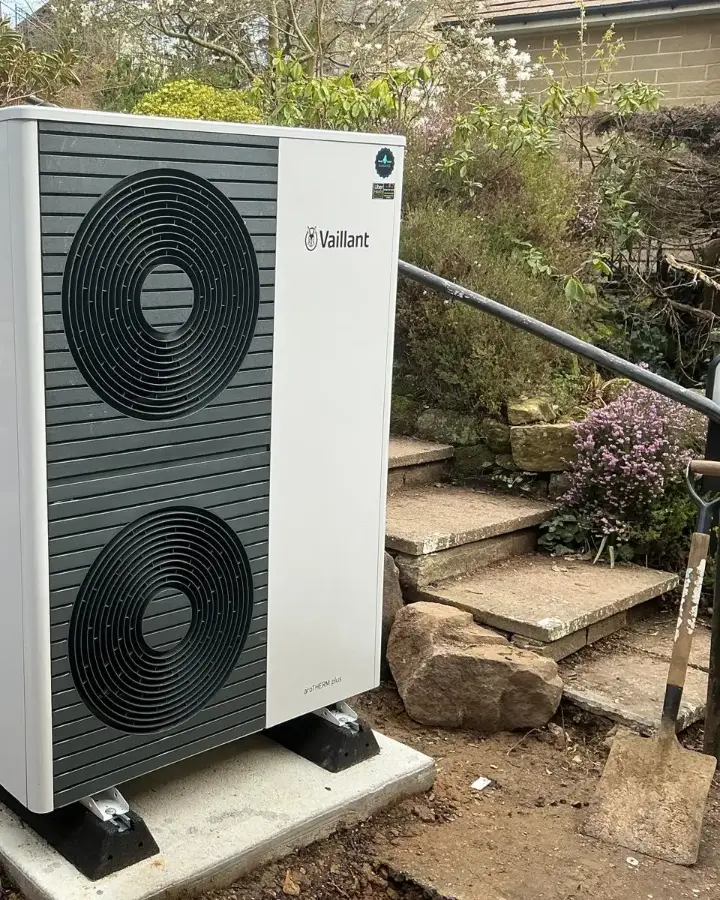
Planning permission and where the outdoor unit goes
Most homes don't need planning permission. Heat pumps fall under permitted development, provided the unit sits the right distance from your boundary and doesn't exceed a certain size.
Where it gets tricky is placement, not paperwork. A lot of the older ex-colliery streets have narrow side passages and small rear yards, which affects where the unit can physically go and how far pipework has to run back to the house.
- Distance from the boundary line, checked before we quote
- Noise position — away from bedroom windows and neighbours' seating areas
- Solid, level base with room for airflow on all sides
- Access for future servicing, no squeezing behind fence panels
- Listed building or conservation area status, which does change the rules
If your house is listed or in a conservation area, you may need consent. That's rare around here, but we check before designing anything.
What it costs
The Boiler Upgrade Scheme takes £7,500 off, and grant-funded installations are delivered through Heat Geek's Zero Disrupt and Black Label programmes, so it's available on your project. You don't pay it and claim it back. Your quote shows the total install cost with the grant already deducted — total, less the grant, is what you actually pay. Heat Geek handle the claim.
On a Zero Disrupt install, that can bring what you pay for a heat pump close to what you'd pay to replace your boiler — sometimes less, sometimes similar. Not because a heat pump is a cheaper machine, but because £7,500 of it isn't yours to find.
For a heat pump the heat loss survey is required, not optional. If you have come here from one of our boiler pages you will have read that a survey usually isn't needed for a boiler swap. A heat pump is the exception. It runs at low flow temperatures, where a sizing error is expensive rather than merely untidy, so the survey is the design rather than a formality.
Installation is quoted after the heat loss survey, because the survey determines the size of the unit, whether radiators need upgrading, and how far the pipework has to run.
The survey is £120 including VAT, £138 in Band A. It's a stand-alone piece of work — the fee isn't credited against the installation and isn't rolled into the quote, because what you're buying is the room-by-room heat loss model and the system design, and that's yours whether you go ahead or not. Two homes on the same street can need very different systems.
We quote the whole job — survey, design, unit, cylinder, radiator changes, pipework, electrical connection and commissioning — as one figure, not a headline price with extras added later. Parts and materials are itemised separately from labour, and you see the numbers before we order anything.
Once installed, annual servicing is £240 including VAT at standard rate and £264 in Band A. Check your postcode band on our rates page.
Survey to commissioning
Every job starts with a proper heat-loss survey, not a guess. We measure your walls, windows, insulation and current radiators, then work out exactly what size heat pump your home needs. Skip this and you end up with a system that's either too small to keep you warm or oversized and noisy.
- Heat-loss survey and system design, following Heat Geek methodology room by room
- Design sign-off — we confirm heat pump size, radiator changes and pipe routing with you before any work starts
- Removal of the old system if you're switching from a gas boiler, and preparation of the outdoor unit location
- Installation of the heat pump, hot water cylinder, and any upgraded radiators or pipework needed for lower flow temperatures
- Electrical connection and commissioning, where the system is set up and tested against the original design figures
- Handover, where we walk you through the controls and explain how the system behaves through the seasons
Most homes take a few days. Terraced houses often need extra care around pipe routing, since older solid walls change how heat moves through a room. Bigger detached properties usually throw up fewer surprises but need more radiator swaps.
We don't leave until the commissioning figures match the design. That's the whole point of following a proper process — the system performs the way it was promised to.
Commissioning, and why it decides your running costs
A heat pump doesn't prove itself on install day. It proves itself over the first heating season.
- Flow temperature checked against the heat-loss design, not just set and left
- Refrigerant charge and pressures confirmed on the outdoor unit
- Controls and thermostat programming tested with you, so you know how to use it
- System run through a full heating cycle to catch any short-cycling early
We see plenty of heat pumps that were never properly commissioned — running warm but never efficient. It's usually the same cause: flow temperature set too high because nobody checked the delta T against the actual heat-loss figures.
Older solid-brick terraces need that extra attention, because the radiators were never designed for low flow temperatures in the first place. Getting the balance right at commissioning is what keeps running costs down through the year.
What our customers say
Where do I start? I contacted Chris from UberHeats about getting a new heat pump installed in our property in Rotherham and I was blown away by Chris’s knowledge and technical skills. He put me at ease and really explained everything I needed to consider to get the most energy efficient system for our property, We would highly recomend UberHeats for anybody looking for any sort of new heat pump or boiler. They are the best around for sure.
Annual Service of ASHP
Very Pleased with Uberheats service, good communication, additional text reminder of projected arrival time, Chris arrived within allocated time slot, clean and tidy working throughout, friendly disposition and was able to answer all my questions about the Service of the ASHP. All in all a very good experience. Will be using Uberheats again.
Areas we cover
Most of our heat pump and system design work is close to home. Rotherham (S60 to S66), Barnsley (S70 to S75), Doncaster (DN1, DN2, DN4, DN5 and DN6), north and east Sheffield (S4, S5, S9 and S35) and Hemsworth and South Elmsall (WF9) are all on our standard rate. Further out, Chesterfield and North Derbyshire (S40 to S44), Worksop (S80 and S81), Wakefield (WF1 to WF5), the Five Towns, and Holmfirth and Denby Dale (HD8 and HD9) are on our Band A rate, 10% higher for the travel. We don’t cover Sheffield city centre (S1, S2, S3 and S6), Dewsbury and Batley, Huddersfield itself, or Leeds.
Standard rate
- S60
- S61
- S62
- S63
- S64
- S65
- S66
- S70
- S71
- S72
- S73
- S74
- S75
- DN1
- DN2
- DN4
- DN5
- DN6
- S4
- S5
- S9
- S35
- WF9
- DN12
Band A: same work, 10% added for travel
- S7
- S8
- S10
- S11
- S12
- S13
- S14
- S17
- S20
- S21
- S26
- S36
- S25
- S18
- S32
- S33
- S40
- S41
- S42
- S43
- S44
- S80
- S81
- NG20
- DN10
- DN11
- DN22
- DN3
- DN7
- DN8
- DN9
- DN21
- WF1
- WF2
- WF3
- WF4
- WF5
- WF6
- WF7
- WF8
- WF10
- WF11
- HD8
- HD9
Related services
Frequently Asked Questions
How long does a heat pump installation take?
Most take a few days from start to finish. Terraced houses sometimes need extra time, since older solid walls change how pipework has to be routed. Bigger detached homes usually move faster but often need more radiators swapped. Before any of that starts we carry out a heat-loss survey and agree the system design with you, so there are no surprises once work begins.
Will my terraced house need extra work for a heat pump?
Often yes, especially on solid-wall terraces without cavity insulation. Many streets around Rotherham and the Dearne villages were built with coal fires and small radiators in mind, not low-temperature heating. That usually means bigger radiators, and sometimes floor or external wall insulation, before the system runs efficiently. It doesn't rule out a heat pump — it changes the order of work.
Do I need planning permission for a heat pump?
Most homes don't, since heat pumps usually fall under permitted development. That applies as long as the outdoor unit sits the correct distance from your boundary and stays within size limits. The real challenge is often placement rather than paperwork, particularly on older streets with narrow side passages and small yards. If your property is listed or in a conservation area, consent may be needed, and we check before designing anything.
How do I know if my home isn't ready yet?
The main warning signs are thin or missing loft insulation, single-glazed windows, solid walls with no added insulation, and radiators already undersized for their rooms. None of these rule out a heat pump forever, but fixing the fabric first usually makes more sense than installing then upgrading later. If you're planning renovation work in the next year, it's worth holding off until that's done.
Where can the outdoor unit go if I have a small yard?
It depends on boundary distance, noise position, and access for servicing, which we check on every survey. Narrow side passages and small rear yards are common on older terraced streets and they do limit where the unit can sit and how far pipework runs. We look for a solid, level base with room for airflow on all sides, away from bedroom windows. This gets settled at the design stage, well before installation day.
Talk to the office team
Office open Monday to Friday 8am to 6pm, and Saturday 8am to 12pm. Tell us what's going on and we'll book the right visit, in a weekday 4-hour slot: 8am to 12pm, 10am to 2pm or 12pm to 4pm.