
Boiler Replacement in Rotherham and Barnsley: Get It Sized Right, Fitted Right
Boiler replacement across Rotherham and Barnsley. We'll tell you honestly whether a repair still makes sense first. Gas Safe registered.
New boiler from£2,200including VAT, fitted
Replacing like for like? Get an instant boiler price →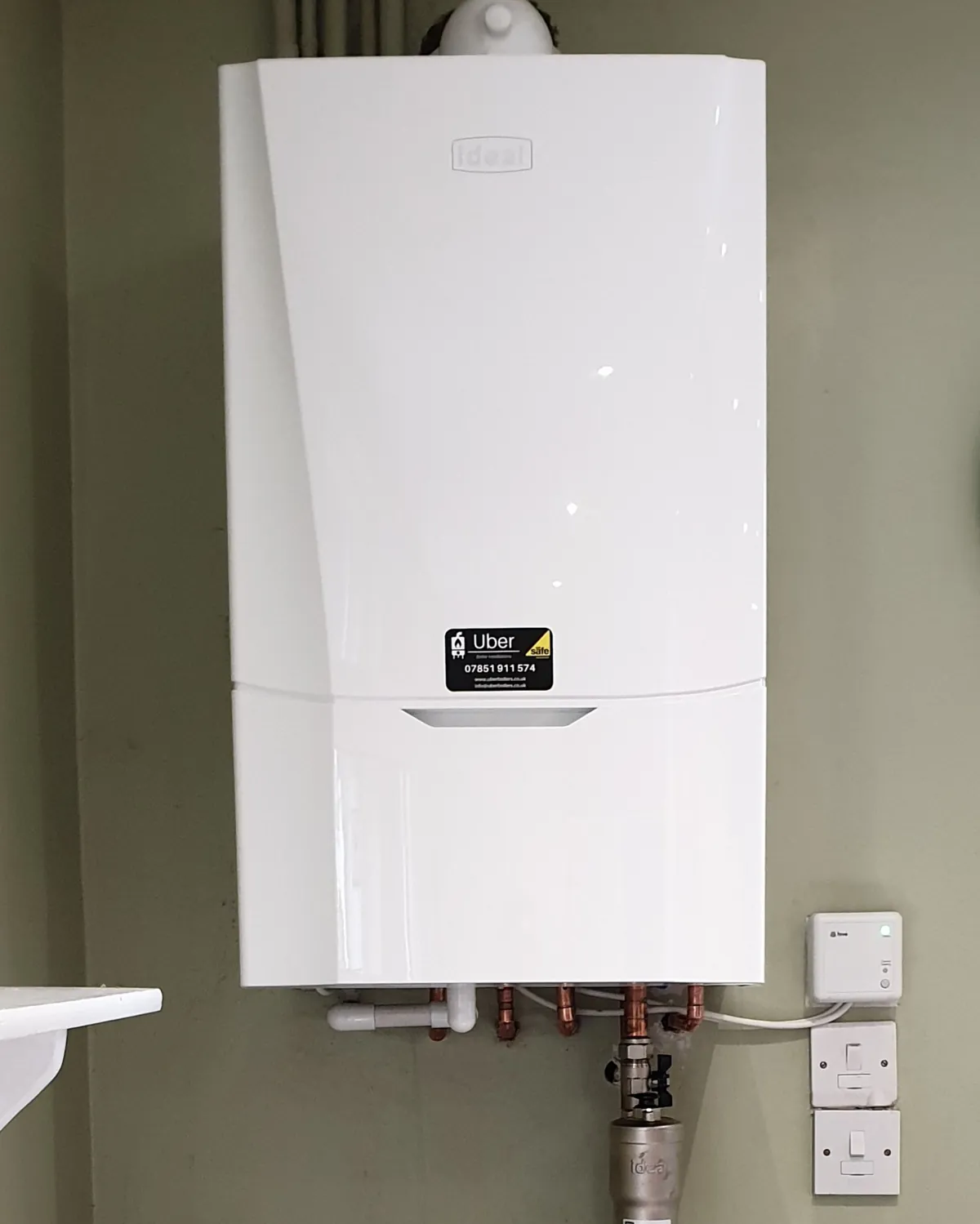
- Gas Safe registered 584578
- Heat Geek Assured
- 100+ 5-Star reviews on Google
- In the trade since 2009
- DBS checked
Repair or replace? The honest answer
Quick Summary: A single breakdown doesn't mean you need a new boiler. A pattern of them usually does. Age is the biggest tell — once a boiler passes 10 to 15 years, parts get harder to source and efficiency drops off.
Every boiler has an off day now and then. A pilot light goes out, the pressure gauge dips, the house feels a shade cooler. None of that is a crisis on its own. What matters is whether it's a one-off or part of a pattern.
We see this every week. Someone calls about a strange noise, and it turns out the boiler's been making that noise for months.
Signs it's genuinely failing:
- Repairs keep happening — three or more call-outs in a year for different faults
- Energy bills have crept up even though usage hasn't changed
- Rooms heat unevenly or take much longer to warm than they used to
- The boiler is over 10 to 15 years old and parts are getting harder to source
- Kettling — a rumbling or banging sound from inside the unit
Signs a repair is still the right call:
- One isolated fault, not a pattern of breakdowns over the last year or two
- The boiler is under ten years old and parts are still readily available
- Efficiency has stayed roughly steady, with no sudden jump in gas usage
- No visible corrosion, leaking, or damage to the heat exchanger
- Pressure and firing behave normally once the specific fault is fixed
If two or more of the first list apply at once, the boiler isn't having a bad day — it's wearing out. But a single stuck pump doesn't mean the whole system is failing. It means the pump failed. That's exactly the kind of diagnosis our Gas Safe registered engineers are trained to make rather than guess at, and it's why we'd rather come and look than tell you over the phone.
We'd rather fix what can be fixed. There's more money in fitting a new boiler; there's more repeat business in being straight with you.
Already know it's time? If the new boiler is going in the same place as the old one, you don't need to wait for a visit. Get your boiler replacement price online in a few minutes: choose your boiler, see everything that's included, and send it to us to book in. If you're moving the boiler or changing to a different type of system, the quote tool will tell you, and we'll arrange a quote visit instead.
Getting the size right before any work starts
A bigger boiler isn't a better boiler. Oversized units short cycle and wear parts out early. Undersized units run flat out and still can't keep your radiators warm in January. Getting the size right is the single biggest factor in whether your new boiler runs well for years or gives you grief within months.
We look at your actual heat loss, not the old boiler's rating:
- Room-by-room radiator sizes and how much heat each space loses
- Wall construction, insulation levels, and window type
- Hot water demand — how many bathrooms, and how many people use them at once
- Pipework size and layout
This is what our Heat Geek Heat-Loss Survey and System Design covers. Not guesswork, a proper calculation before a pipe gets touched.
Do you need one for a replacement? Often not. If nothing about the building has changed since your current system was sized, the existing output is a sound starting point. A survey is a separate piece of work — £120 including VAT, £138 in Band A — and it's worth it if you've since had an extension or conservatory, cladding, rendering or wall insulation, loft or floor insulation, or new windows and external doors. Each of those changes the heat loss figures, and a boiler sized for the old house is usually oversized for the new one.
Swap day
Most straightforward swaps take one day. A more involved job — moving the boiler location or upgrading pipework — can run into a second. We'll tell you which applies before we start, not after.
- We isolate the gas and water supply and protect your floors and stairs
- The old boiler comes out, along with any redundant pipework or tank
- New pipework and flue are fitted to current standards, and the boiler goes in
- Our Gas Safe registered engineer commissions the system and checks pressures and flow rates
- We test the heating and hot water through a full cycle before we leave
- You get a walkthrough of the controls, so nothing feels like a mystery
Nine times out of ten the trickiest part isn't the boiler itself — it's the flue route through an older wall or roof line. Plenty of homes around here still run older back boiler systems from the 1960s and 70s, tucked behind a fireplace or in a cupboard never built for modern kit. That's where experience matters, and it's why we plan the route before the day rather than working it out on the spot.
If you're putting a boiler somewhere there wasn't one before, or changing system type entirely, that's a new installation rather than a replacement.
Commissioning, testing, and sign-off
Fitting the boiler is the easy part to picture. The real work happens once it's on the wall and we start testing it properly.
This is where a rushed job falls apart later. We've been called to homes where a boiler was hung and switched on with barely a glance at the settings, then started short cycling or running hot within months.
- Flue gas analysis to confirm safe combustion and correct CO readings
- System pressure test to check for leaks at every joint
- Flow temperature set correctly for the radiators and hot water demand in your home
- Full system flush check to confirm heat is moving through every radiator evenly
- Benchmark logbook completed and left with you for future servicing
Flow temperature matters more than most homeowners realise. Set it too high and the boiler works harder than it needs to, burning more gas for the same warmth. Get it right and you'll notice quieter running and steadier heat room to room.
Once the new boiler is running we register it on the manufacturer's portal. That activates the manufacturer's warranty and puts the Gas Safe notification through at the same time, which is what covers the building regulations side. Both certificates are emailed to you — sorted as part of the job, not left for you to chase.
Once it's in, keep it covered — an annual service keeps the manufacturer warranty valid and is £114 including VAT at standard rate.
Ask about a heat pump while you're on the phone
When you ring for a boiler quote, we'll give you a heat pump estimate alongside it if you want to see both. Same call, no extra cost, no obligation.
Most people don't ask, because they assume the answer is obviously more expensive. With the £7,500 Boiler Upgrade Scheme grant taken off up front, a lot of them are surprised how close the two come out.
Worth being straight about what you’d be comparing. The boiler figure is a quote, from our online boiler quote for a like-for-like swap, or from a quote visit if the job is bigger. The heat pump figure is an estimate until a heat loss survey is done, which is the point the number becomes fixed. So it’s two things worth seeing side by side, not two final prices.
What our customers say
Replacement Boiler
Have used Uber heats for a number of years to service mine and my daughter's boilers. Chris is a very friendly man ,gets on with the job , is tidy and competitively priced. So was a no brainer when in need of a new boiler fitted who to go to . Great job thanks so much. Would definitely recommend this company.
Boiler Repair
After having an issue with our boiler Chris came and did his usual magic and corrected the fault with a new replacement part. He's our go to man for anything plumbing and heating and never lets us down for services and repairs. 10 outta 10.
Where we work
Our standard rate covers all of Rotherham (S60, S61, S62, S65 and S66), the Dearne Valley (S63 for Wath upon Dearne, Bolton upon Dearne, Goldthorpe and Thurnscoe, and S64 for Mexborough, Swinton and Kilnhurst), all of Barnsley (S70 to S75), Doncaster (DN1, DN2, DN4, DN5, DN6 and the north of DN12) and north and east Sheffield (S4, S5, S9 and S35). Chesterfield, Worksop, Wakefield, Pontefract and the rest of Sheffield outside the city centre are on our Band A rate: the same work, with 10% added for the travel. Not sure which you’re in? Ring 07851 911574 with your postcode and we’ll tell you straight away.
Standard rate
- S60
- S61
- S62
- S65
- S66
- S63
- S64
- S70
- S71
- S72
- S73
- S74
- S75
- DN1
- DN2
- DN4
- DN5
- DN6
- DN12
- S4
- S5
- S9
- S35
- WF9
Band A: same work, 10% added for travel
- S7
- S8
- S10
- S11
- S12
- S13
- S14
- S17
- S20
- S21
- S26
- S36
- S25
- S18
- S32
- S33
- S40
- S41
- S42
- S43
- S44
- S80
- S81
- NG20
- DN10
- DN11
- DN22
- DN3
- DN7
- DN8
- DN9
- DN21
- WF1
- WF2
- WF3
- WF4
- WF5
- WF6
- WF7
- WF8
- WF10
- WF11
- HD8
- HD9
Related services
Frequently Asked Questions
How do I know if I need a repair or a full boiler replacement?
If your boiler has one isolated fault and it's under ten years old, repair is usually the right call. Watch for a different pattern though: three or more call-outs in a year, rising energy bills with no change in usage, or a rumbling and banging sound called kettling. If two or more of these show up together, especially on a boiler over 10 to 15 years old, it's telling you it's done rather than having a bad day.
How long does a boiler replacement take?
Most straightforward swaps take one day. If we need to move the boiler location or upgrade old pipework, it can run into a second. We'll tell you which applies before any work starts, so there are no surprises. This matters most in older properties with back boiler setups from the 1960s and 70s that need extra planning around them.
What size boiler do I need for my home?
The right size depends on your actual heat loss, not on copying your old boiler's rating. We look at your radiator sizes, wall construction, insulation, and how much hot water your household uses at once. There's a real mix of housing around here, from older terraces with solid brick walls to newer estates with better insulation, and these need very different boiler output.
Are older homes harder to fit a new boiler into?
Often the tricky part isn't the boiler itself, it's the flue route through an older wall or roof line. Many terraced homes near town centres have solid brick walls with little or no cavity insulation, and boilers tucked behind fireplaces or in cupboards never built for modern kit. We plan the flue route and pipework before we start, so the fitting goes smoothly on the day.
Do you test the heating system before you leave?
Yes, every installation ends with a full test of your heating and hot water through a complete cycle. We commission the system, check pressures and flow rates, and confirm everything is firing correctly before packing up. You'll also get a walkthrough of your new controls, so you know exactly how to use them once we've gone.
Talk to the office team
Office open Monday to Friday 8am to 6pm, and Saturday 8am to 12pm. Tell us what's going on and we'll book the right visit, in a weekday 4-hour slot: 8am to 12pm, 10am to 2pm or 12pm to 4pm.