
Central Heating Installation in Rotherham and Barnsley: Designed as One System, Not Assembled Part by Part
Central heating installation in Rotherham and Barnsley. Boiler or heat pump, pipework, radiators and controls designed as one system, heat loss survey included.
- Gas Safe registered 584578
- Heat Geek Assured
- 100+ 5-Star reviews on Google
- In the trade since 2009
- DBS checked
What this page covers, and what it doesn't
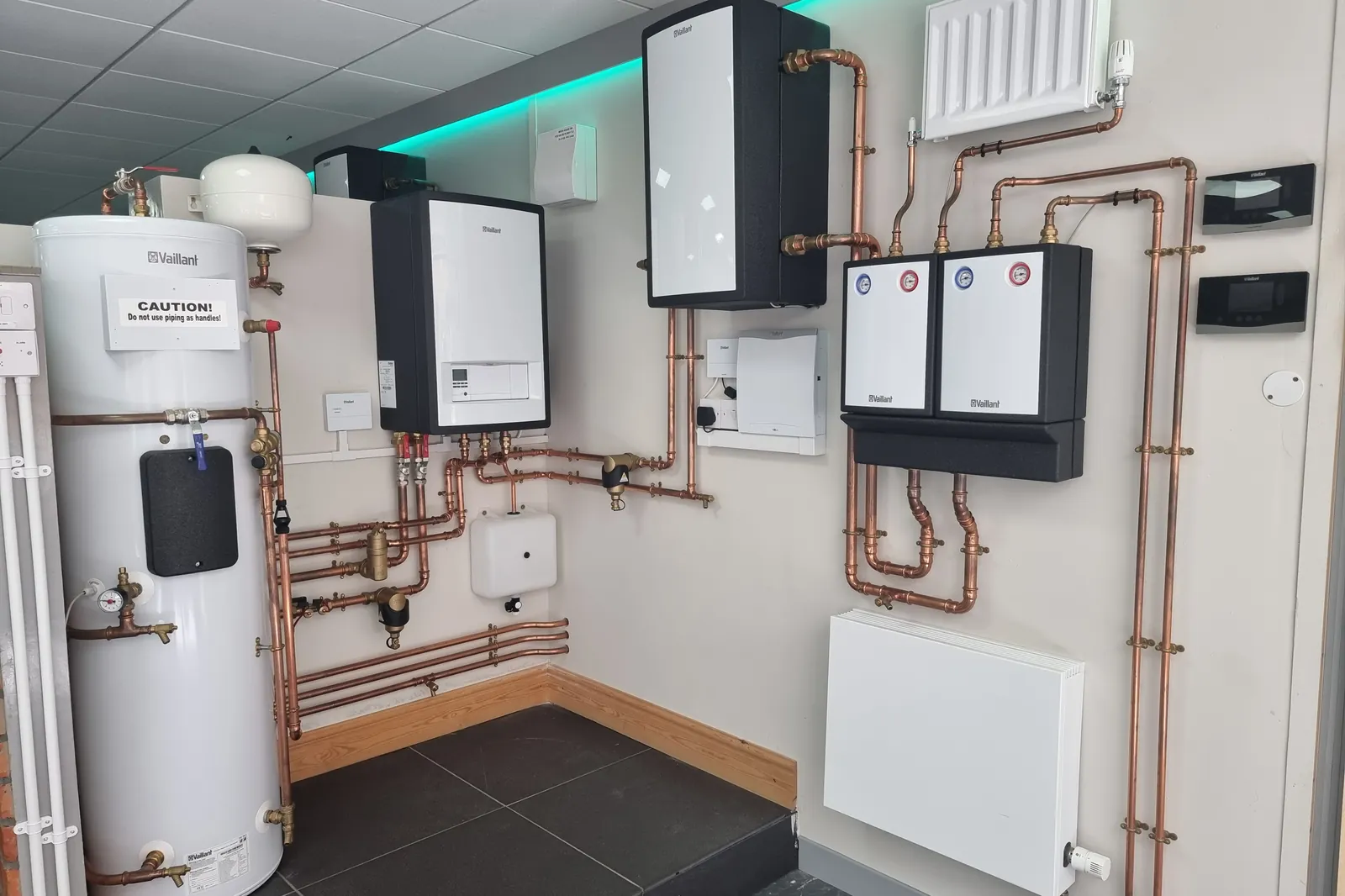
A central heating installation means the whole system — heat source, pipework, radiators and controls, designed together. That's a different job from swapping a boiler into a system that's already there.
- A full central heating installation — this page. New systems, complete replacements, properties being converted from something else, or systems so patched together that replacing the parts individually stops making sense
- A boiler installation or replacement — the heat source only, on existing pipework
- A heat pump installation — the same whole-system approach, but designed around lower flow temperatures
- A repair — the system is there and something's gone wrong with it
If you're not sure which you need, ring us. The answer changes what we'd quote for, and guessing wrong in either direction costs you.
When the system is failing rather than faulty
Quick Summary: A fault is a one-off. A failing system repeats itself. Cold radiators, rising bills and a boiler that keeps cutting out aren't having a bad day — together, and repeated over months, they're a system telling you it's done.
We get called to plenty of homes around Rotherham and the Dearne villages with older gravity-fed systems, the kind common in terraced streets near town centres. Cold spots, banging pipes, a boiler that short cycles. On their own, none of it means a new system. But together, and repeated, it usually does.
- Radiators staying cold at the top even after bleeding
- The boiler firing up and shutting off within minutes, over and over
- Heating bills climbing while usage stays the same
- Brown or rusty water when you bleed a radiator
- Rooms that never quite reach the temperature you set
Rusty water is the one we take most seriously. It usually means sludge has built up in the pipework, blocking flow to radiators — a system patched a few too many times without ever being flushed or upgraded properly.
A single cold radiator is a fault. A house full of lukewarm ones, a boiler that won't hold pressure, and a bill that keeps climbing — that's a system failing.
When a flush or a radiator swap fixes it instead
Before we quote for a whole system, we check whether something smaller solves the problem.
If your boiler is under ten years old and heating other rooms fine, sludge in the pipework is the more likely culprit than a system at the end of its life — and a flush clears that out for a fraction of the cost. If it's one tired radiator dragging a room down, a swap often does the job without touching the rest of the system.
Our power flush page sets out how to tell, and what the three flush options cost.
Don't let anyone talk you into replacing a whole system when a clean or a swap gets the same result. That includes us — if that's what your system needs, that's what we'll quote for.
Designing the system around your house
Picking a boiler or heat pump isn't about brand names. It's about your house.
Get the size wrong and you'll either waste money heating a system that's too big, or shiver through winter because it's too small. We see homes every week fitted with a boiler that was never right for the property — usually because someone replaced like for like without asking whether the original was correct either.
A lot of the housing around here is older terraced and semi-detached, solid brick, with less loft insulation than a newer build. That changes the heat loss numbers completely. A system sized for a modern, well-insulated house won't cope the same way without adjustments to radiator sizing and flow temperatures.
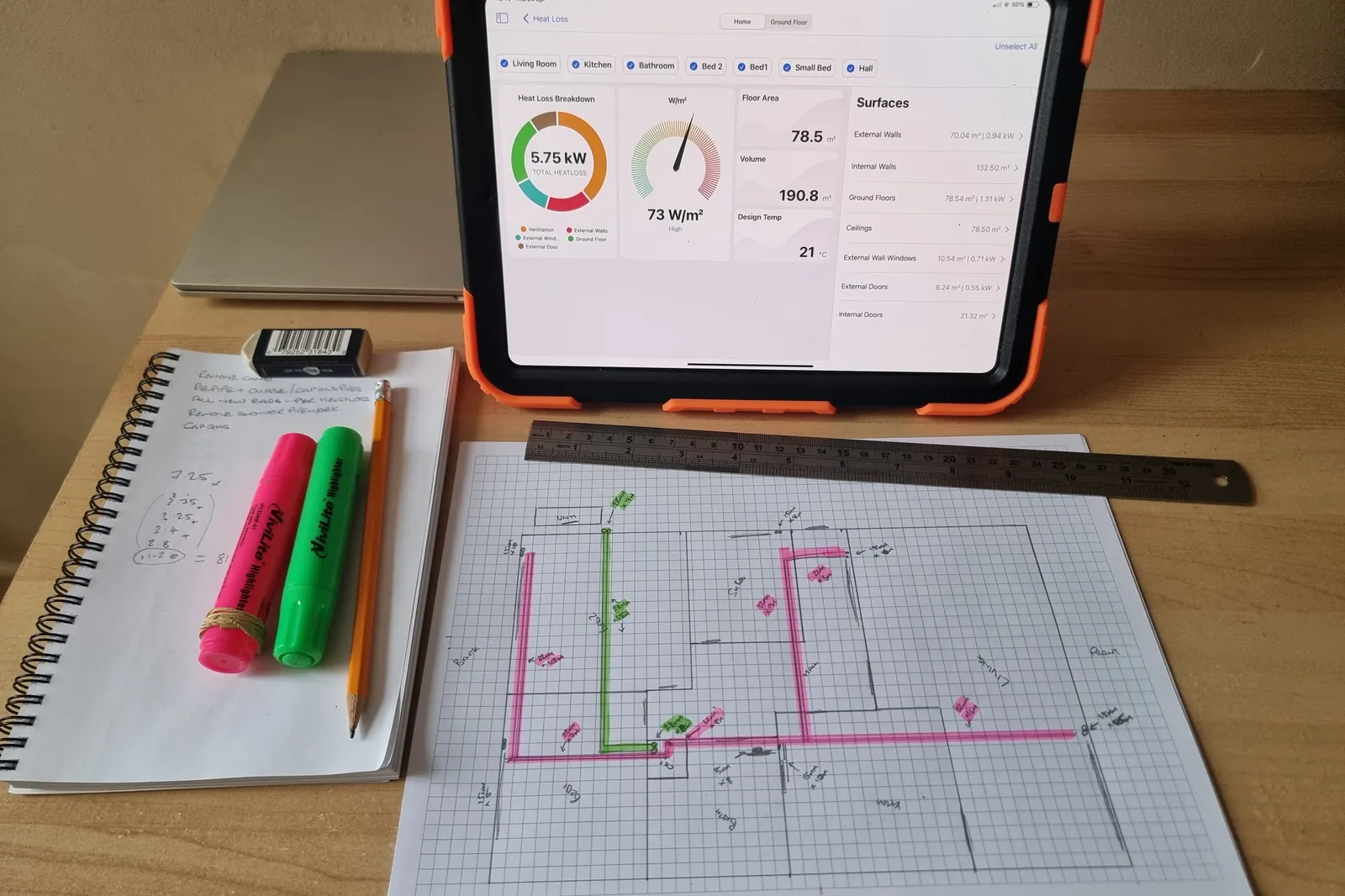
So we run a proper heat loss survey first — LiDAR scanned, room by room, through Heat Geek's design software. It calculates exactly how much heat each room loses, then matches system output to that. Not a guess based on square footage, and not an estimate off old paperwork.
- Room-by-room heat loss, not total floor area
- Existing radiator sizes, and whether they need upgrading
- Hot water demand from your household
- Insulation levels in walls, loft and floors
- Whether a heat pump can run efficiently at your home's flow temperature
Most homeowners have never had this checked. They just replaced like for like. That's usually where the comfort problems started.
Because a full installation sizes the radiators as well as the heat source, the heat loss figures aren't a formality — they're the design everything else is built from. That survey is a separate piece of work at £120 including VAT, £138 in Band A, and it isn't credited against the installation.
What the installation involves
- Heat loss survey and system design, so pipework and radiator sizing match the house
- Old system removed, with dust sheets down and the work area protected
- New heat source, pipework and radiator upgrades fitted to current standards
- System flushed to clear sludge from any pipework being retained
- Full commissioning, controls set up, system tested under real running conditions
- Walkthrough with you, showing how the thermostat and controls work before we leave
Most straightforward installs finish in a day or two. Bigger jobs — radiators moving, pipework rerouted — run longer, and we'll tell you upfront which yours is.
Gas Safe registered (No. 584578), Heat Geek Assured and DBS checked. Materials are quoted separately from labour, and you see the figures before we order anything.
What to ask any installer before you sign
A good installer won't flinch at these. The answers tell you who you're hiring.
- Will you do a heat loss survey before quoting, or estimate room sizes?
- What size boiler and radiators are you recommending, and why that size?
- How will the system be balanced and commissioned once it's fitted?
- Who's doing the work — a qualified engineer or a subcontractor?
- What happens if something needs adjusting after the first few weeks?
- Can I have a written breakdown of what's included?
That first one matters more than the rest. Skip it and you risk an oversized boiler that short-cycles, or an undersized one that never keeps the house warm on a cold January morning.
A vague quote with one lump figure usually hides gaps — missing valves, no flush, no thermostat upgrade. Get it in writing.
And if an installer can't explain why they've chosen a particular boiler or radiator size for your house, that's a red flag worth walking away from.
(Gas Safe registration is a legal requirement rather than a differentiator — our number is 584578 and you can check it on the Gas Safe Register. What separates installers is the design work, which is what these questions are really about.)
What our customers say
New Boiler
Absolutely brilliant service by Chris. Arrived on time and worked solidly all day, lovely new boiler and he cleared all his mess up. Really pleased with my new boiler and would recommend Uberheats to anyone. Thank you.
Where do I start? I contacted Chris from UberHeats about getting a new heat pump installed in our property in Rotherham and I was blown away by Chris’s knowledge and technical skills. He put me at ease and really explained everything I needed to consider to get the most energy efficient system for our property, We would highly recomend UberHeats for anybody looking for any sort of new heat pump or boiler. They are the best around for sure.
Areas we cover
Most of our heat pump and system design work is close to home. Rotherham (S60 to S66), Barnsley (S70 to S75), Doncaster (DN1, DN2, DN4, DN5 and DN6), north and east Sheffield (S4, S5, S9 and S35) and Hemsworth and South Elmsall (WF9) are all on our standard rate. Further out, Chesterfield and North Derbyshire (S40 to S44), Worksop (S80 and S81), Wakefield (WF1 to WF5), the Five Towns, and Holmfirth and Denby Dale (HD8 and HD9) are on our Band A rate, 10% higher for the travel. We don’t cover Sheffield city centre (S1, S2, S3 and S6), Dewsbury and Batley, Huddersfield itself, or Leeds.
Standard rate
- S60
- S61
- S62
- S63
- S64
- S65
- S66
- S70
- S71
- S72
- S73
- S74
- S75
- DN1
- DN2
- DN4
- DN5
- DN6
- S4
- S5
- S9
- S35
- WF9
- DN12
Band A: same work, 10% added for travel
- S7
- S8
- S10
- S11
- S12
- S13
- S14
- S17
- S20
- S21
- S26
- S36
- S25
- S18
- S32
- S33
- S40
- S41
- S42
- S43
- S44
- S80
- S81
- NG20
- DN10
- DN11
- DN22
- DN3
- DN7
- DN8
- DN9
- DN21
- WF1
- WF2
- WF3
- WF4
- WF5
- WF6
- WF7
- WF8
- WF10
- WF11
- HD8
- HD9
Related services
Frequently Asked Questions
Do I need a full central heating installation or just a new boiler?
If your pipework and radiators are sound and correctly sized, a boiler replacement on the existing system is usually the right call. A full installation makes sense when the pipework is at the end of its life, the radiators were never sized properly, or the system has been patched so many times that replacing parts individually stops adding up. The heat loss survey tells us which you're looking at.
Is my cold radiator a quick fix or a sign I need a new system?
A single cold radiator is usually just a fault. Repeated problems across the house point to a failing system. Cold at the top and warm at the bottom is often trapped air or sludge, and a flush or radiator swap usually sorts it. Rusty water when you bleed is more serious — it means sludge has built up in the pipework, common in older gravity-fed systems, and often signals a full upgrade.
How long does a central heating installation take?
It depends on the property and whether pipework or radiators need upgrading alongside the heat source. A straightforward job in a smaller property moves faster than a full redesign in an older terrace with outdated radiator sizing. The heat loss survey happens before any installation date is confirmed, so you'll know what's involved ahead of time.
Are older terraced homes harder to fit central heating in?
They need more careful sizing, not more trouble. Solid brick terraces near town centres often have less insulation than modern builds, which changes how much heat each room loses. A system sized for a newer house won't perform the same way here without adjusted radiator sizing and flow temperatures — which is exactly why the survey matters more in this housing stock than on a newer estate.
Will you tell me if I don't need a new system?
Yes. If your boiler is under ten years old and the problem is sludge or one tired radiator, we'll quote for the flush or the swap rather than the system. There's more money in a full installation and more repeat business in being straight with you.
Talk to the office team
Office open Monday to Friday 8am to 6pm, and Saturday 8am to 12pm. Tell us what's going on and we'll book the right visit, in a weekday 4-hour slot: 8am to 12pm, 10am to 2pm or 12pm to 4pm.